Packaging partner decisions tend to get framed as purchasing decisions. They are not. For protein processors, the packaging running on your lines touches throughput, labor efficiency, product consistency, food safety, shelf life, and your ability to make changes without breaking what already works. That makes it an operational decision first.
Yet most supplier evaluations still center on unit price and product availability. Those factors matter. But they rarely tell the full story. A packaging option that costs less per unit but introduces variability across shifts, increases downtime, or creates inconsistency downstream can erode any cost advantage within weeks.
The real question for procurement and operations teams is not just what a supplier sells. It is how they work with your team to reduce uncertainty and support the outcomes your operation depends on.
This guide is designed to help protein processors evaluate what separates a packaging supplier from a packaging partner, and why that distinction has more operational impact than it might appear at first.
A Strong Packaging Partner Understands the Processing Environment
Protein processing environments are unforgiving. Line speeds, temperature swings, product variability across SKUs, sanitation protocols, labor turnover. Packaging has to perform reliably through all of it, not in a controlled setting, but across shifts, seasons, and the realities of a production floor.
A packaging partner who understands these conditions will ask different questions than one who simply takes orders. They will want to know how your lines run, where bottlenecks occur, what your operators deal with day to day, and where packaging is currently helping or limiting throughput.
This is also where an important distinction comes into play. Material specifications and film structures matter, but they are a different conversation. What protein processors need from a packaging partner is someone who understands how packaging performs in production: how it runs on your equipment, how it holds up during cook-in or cook-chill cycles, how it affects labor on the line, and whether it delivers the consistency your customers expect. Most supplier relationships never get to that level of engagement. The ones that do tend to last.
Testing Should Be Part of the Partnership, Not an Afterthought
The most common concern processors raise when evaluating a new packaging solution is simple: “How do we know it will work for us?” No amount of spec sheets or general case studies can answer that. Every operation has its own equipment configuration, product specs, environmental conditions, and workforce dynamics. What runs well in one plant may behave differently three states away.
A strong packaging partner builds testing into the relationship from the beginning. That means structured trials in your facility, not a demo in theirs. It means working alongside your team to evaluate real performance under real conditions and being transparent about what the testing process involves, how long it takes, and what adjustments may be needed.
This is where many supplier relationships fall short. Testing gets treated as a formality, something rushed through to close a sale rather than designed to protect both sides. In an industry where a PMMI study found that two-thirds of meat, poultry, and seafood manufacturers identify labor as their top operational challenge, any packaging change needs to prove it supports efficiency goals without introducing new problems on the line. A trial that is well structured and honestly evaluated builds more credibility than any product brochure.
Reliable Supply Matters as Much as Product Performance
Procurement teams already know this, but it bears repeating: even high-performing packaging creates risk if the supply behind it is unreliable. Late deliveries, quality variation between lots, dependence on a single overseas source. Any of these can disrupt production schedules, force expensive workarounds, and erode the planning confidence your team needs.
When evaluating a packaging partner, supply reliability deserves as much scrutiny as product specifications. A few questions worth pressing on:
- Where is the product manufactured, and how much of the supply chain does the partner control?
- What is their track record for consistency across production runs?
- How do they manage lead times, and do they maintain buffer inventory?
- What happens when demand spikes or logistics are disrupted?
Supply risk is amplified during transitions. Switching packaging suppliers or introducing a new format already carries operational risk. If the new partner cannot deliver reliably from day one, that risk compounds quickly.
Processors who work with partners that maintain domestic manufacturing capabilities, such as U.S.-based netting production, often gain more control and reduce exposure to logistics disruption. That kind of control matters more than it might seem on paper.
The Right Partner Helps Balance Efficiency, Cost, and Consistency
Cost pressure in protein processing never lets up, and packaging is a visible line item. But experienced teams know that unit price can be misleading. A lower-cost option that increases manual handling, generates more trim waste, slows changeovers, or causes inconsistency in slicing or portioning downstream often costs more than a higher-performing alternative when measured on a cost-in-use basis.
What few supplier evaluations account for is the full labor and throughput impact of a packaging decision. A packaging partner who understands your operation will help your team evaluate total cost of ownership, not just price per unit. That includes:
- Labor impact: does the packaging reduce or increase manual steps per cycle?
- Waste rates and yield loss tied to packaging failures
- Changeover time when switching SKUs or formats
- Effect on throughput during peak production windows
- Time your team spends troubleshooting inconsistency between runs
This kind of analysis requires a collaborative relationship. The partner needs to understand your process well enough to identify where packaging decisions are creating hidden cost, and your team needs confidence that recommendations are grounded in your specific operation rather than generic assumptions.
Innovation Needs Operational Guardrails
Marketing and R&D teams within protein processing companies are constantly looking for differentiation, whether through new flavor profiles, improved product presentation, or formats that respond to shifting consumer preferences. Those goals are real and important.
But for operations and procurement, every innovation introduces a harder question: can we implement this without disrupting what is already working?
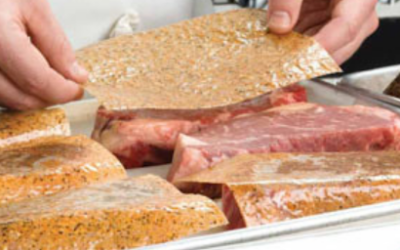
The strongest packaging partners help bridge this gap. They bring capabilities that support innovation, such as seasoning transfer technologies that simplify flavor application and reduce labor steps, netting solutions that improve product shape and consistency, flexible packaging that extends shelf life across distribution, or cook-chill systems that preserve quality for ready-to-eat applications.
These are the types of applications Flavorseal’s product lines are designed to support, from seasoning transfer and netting to flexible packaging and cook-chill systems.
The key word, though, is “support.” Innovation in packaging should not be imposed. It should be evaluated within your process, tested under your conditions, and implemented only when it has demonstrated the expected benefit without creating unacceptable operational risk. A partner who pushes innovation without acknowledging the complexity of implementation is prioritizing their roadmap over yours. That is a signal worth paying attention to.
Cross-Functional Collaboration Creates Better Packaging Decisions
Packaging decisions in protein processing rarely affect just one department. Procurement evaluates cost and supply risk. Operations cares about line performance and labor. R&D focuses on product quality and process refinement. Marketing wants differentiation and consumer appeal.
When these perspectives are not aligned, packaging decisions tend to optimize for one goal while creating friction elsewhere. A procurement-led decision focused on unit cost may introduce a product that runs poorly on the line. An R&D-driven specification may not account for supply constraints. These are not hypothetical scenarios. They happen regularly.
A packaging partner who engages across functions helps prevent this. They can work with procurement on cost-in-use analysis, with operations to test line compatibility, with R&D to refine solutions for specific product requirements, and with marketing to explore how packaging supports new product development. In practice, this means the partner should be as comfortable discussing supply terms with your sourcing team as they are troubleshooting line performance with a plant manager.
Questions to Ask Before Choosing a Food Packaging Partner
Evaluating a packaging partner becomes more productive when the questions focus on how they work, not just what they sell. Consider including these in your evaluation:
- How do you assess whether a packaging solution fits our specific process and equipment?
- What does a typical testing and validation process look like, and how do you support our team during trials?
- How do you help reduce supply risk, and where is your product manufactured?
- How do you approach consistency across production runs and between lots?
- How do you factor labor, throughput, and downtime into your packaging recommendations?
- Can you share examples of work with protein processors facing challenges similar to ours?
- How do you support innovation without disrupting operations that are already performing well?
- How do you engage with different stakeholders across procurement, operations, R&D, and marketing?
The answers will tell you quickly whether a supplier operates transactionally or whether they are positioned to function as a real partner in your operation.
Choosing a Partner Built Around Your Process
Selecting a food packaging partner should not be driven by urgency or by the appeal of a single product feature. It is a decision that touches line performance, food safety, cost control, supply confidence, and your team’s ability to make changes without introducing unnecessary risk.
The partnerships that hold up over time are built on a shared understanding of the processor’s environment, a discipline around testing before moving forward, and a focus on reliable, repeatable performance over short-term convenience.
Flavorseal works alongside protein processors and food manufacturers to address specific packaging challenges through collaboration, testing, and solutions designed around each customer’s process. With decades of experience across seasoning transfer, netting, flexible packaging, and cook-chill systems, our team is built to support the operational, financial, and quality goals that drive your business.
If you are evaluating your packaging partnership or considering a change, our team is available to discuss your specific challenges. The best starting point is always a conversation about your process.