Identifying the next flavor opportunity is rarely the hard part. Marketing teams already do this well. They track consumer preferences, monitor trending profiles, evaluate where a new seasoned variation could create shelf differentiation. The harder question, and the one that determines whether a concept ever reaches a production floor, is whether it can be manufactured consistently, scaled reliably, and integrated into an existing production environment without disrupting what already works.
That gap between idea and production-ready product is where most flavor concepts stall. Not because the flavor lacks potential. Because the operational path to commercialization introduces enough friction to delay, scale back, or shelve the project entirely.
Seasoning transfer technology has become increasingly relevant to this problem. By incorporating seasoning directly into the packaging material, it sidesteps several of the most common barriers between a flavor concept and a finished SKU. For Marketing and R&D teams navigating that path, the practical consequences are worth understanding.
The Real Distance Between a Flavor Concept and a Commercial SKU
One of the most persistent challenges in protein processing is not developing a good product concept. It is surviving the distance between that concept and a product that actually runs in production. Marketing may identify a seasonal flavor opportunity, a line extension for a growing retail segment, a consumer trend worth responding to. Legitimate commercial drivers, all of them.
R&D is asking a different set of questions entirely: Can this be produced at scale? Under actual processing conditions? With acceptable consistency, labor requirements, and operational impact?
Conventional seasoning methods for proteins, including dry rubs, tumbling, marinating, and manual hand-application, each require dedicated equipment, floor space, labor, and sanitation procedures. Every one of those elements has to be evaluated when a new seasoned product is under consideration.
For many processors, the prospect of adding equipment, reconfiguring a line, or introducing a new application step to support a single new SKU creates a barrier that has nothing to do with the quality of the flavor concept itself. The economics simply do not justify it, particularly for limited-time offerings, smaller production runs, or early-stage market tests.
Kansas State University’s food product development resources put the average development cycle for a new food product at approximately two years, with failure rates reaching as high as 90 percent. Much of that risk traces not to market acceptance but to scaling, process integration, and production feasibility. Few tools address that friction as directly as removing the equipment requirement altogether.
Why Flavor Innovation Creates Operational Complexity
Adding a new seasoned product to a line is never just a formulation decision. It triggers a cascade of operational questions that extend well beyond the bench. How will the seasoning be applied? Does the current line have the equipment? What additional labor is needed? What are the sanitation and changeover implications when switching between seasoned and unseasoned SKUs, or between two different flavor profiles on the same shift?
The pressure is real and growing. One industry analysis documented a sauce manufacturer that went from roughly 300 active SKUs to 3,300 over 12 years. Each new product added operational drag: longer changeovers, more complex cleaning cycles, less time available for actual production. Protein processors face comparable dynamics when expanding a flavored product line, especially when each flavor requires its own application step or sanitation validation.
What most product-development discussions miss is the cumulative effect. A single new flavored SKU may look manageable in isolation. But R&D teams never evaluate concepts in isolation. They are assessing a pipeline. When every flavored addition demands dedicated equipment or process modifications, the pipeline narrows fast. Strong bench-top performers still get shelved because the operational path to production is too capital-intensive or too disruptive to a sequence that already runs well.
This is where seasoning transfer technology enters the picture. Not because it eliminates every consideration in development. Because it removes some of the most consequential ones.
Where Seasoning Transfer Changes the Product-Development Calculus
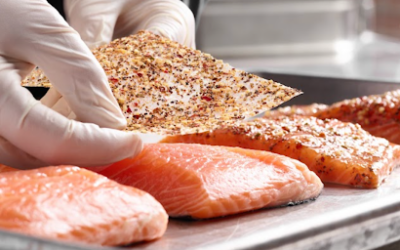
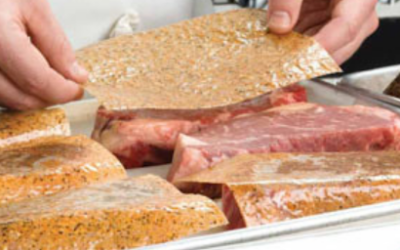
Seasoning transfer technology works by incorporating seasoning directly into a packaging material, whether a sheet, bag, or casing. During processing, the seasoning transfers from the packaging to the protein, producing a finished seasoned product without a separate application step on the production line.
Flavorseal’s SureTransfer™ line includes several formats, each suited to different product types and processing environments:
- Seasoning transfer sheets, designed for portion-cut proteins like steaks, chicken breasts, and bacon, compatible with thermoforming lines
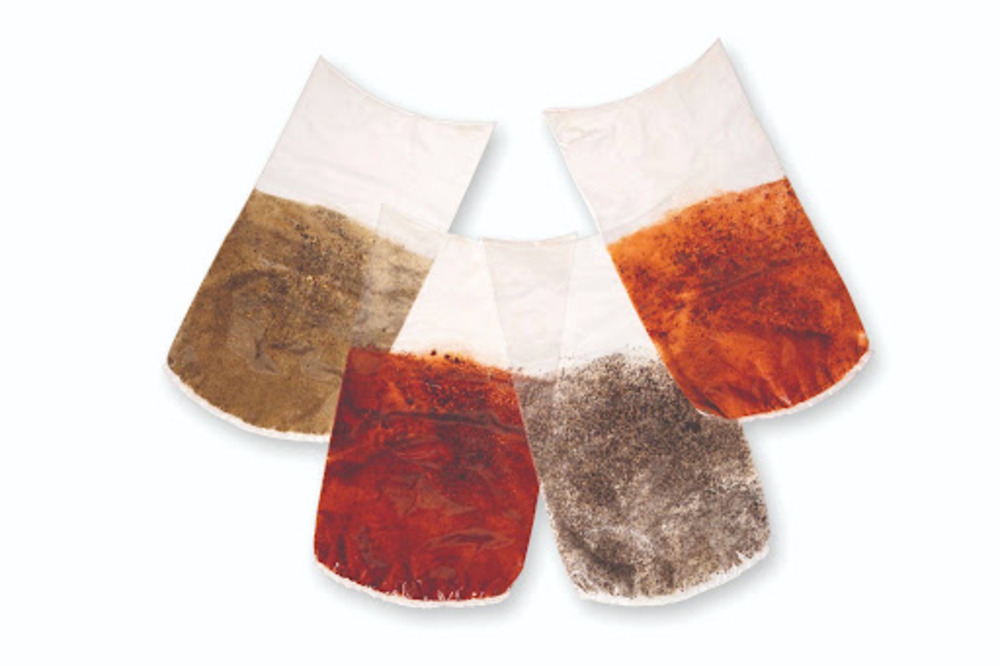
- Seasoning transfer bags, combining Flavorseal’s patented technology with shrink or cook-in bag formats for whole muscle products and poultry
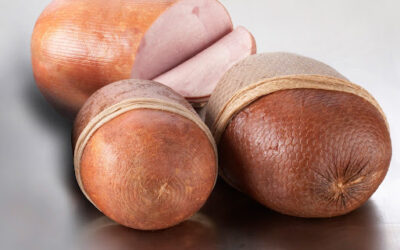
- Seasoned casings, applying seasoning and packaging in a single step for deli meats and processed protein applications
Each format delivers seasoning as part of the packaging process rather than as an added production step. The processor’s line continues to operate as it normally would: same equipment, same workflow, same labor allocation. What changes is the packaging input, not the production process.
The product-development implication is direct. When the path to a new seasoned SKU does not require capital investment in equipment, additional floor space, or a restructured line, the threshold for evaluating a new flavor drops in a way that reshapes which concepts a team is willing to pursue.
What This Means for Marketing and R&D
The tension between speed-to-market and production discipline is real, and it tends to concentrate around exactly the decisions where equipment and process constraints narrow the field.
For Marketing, the practical effect is a wider landscape of flavor concepts that are realistic to pursue. Seasonal variants, regional flavor profiles, retailer-specific exclusives, co-branded concepts: all become viable candidates for development when they do not carry an equipment investment or line reconfiguration behind them.
Flavorseal’s SureTransfer products accommodate a wide range of spice blends, including proprietary formulations and blends with larger particulates for visual impact, giving product managers more room to differentiate at the shelf without first clearing a capital expenditure. That flexibility matters most when the window for a seasonal or trend-driven launch is measured in weeks, not quarters.
For R&D, the value is structural. Instead of scoping a project that includes both a new seasoning application system and a new product formulation, the evaluation narrows to the product itself. How does the seasoning perform on this specific protein, under these cook conditions, across multiple production runs? A more contained development exercise. A faster path to a go or no-go decision. And critically, R&D capacity that would have been consumed by equipment qualification can be redirected toward product optimization, sensory refinement, or the next concept in the pipeline.
When the conversation shifts from “can we justify the investment?” to “does the product perform?”, both teams are operating closer to their core expertise. That shift alone can change how many concepts advance past the idea stage in a given development cycle.
Validation Still Matters
Removing the equipment and process barriers reshapes the development work. It does not eliminate it. Depending on the specific product, protein type, and processing conditions, R&D may still need to evaluate:
- Flavor transfer levels and seasoning adhesion after processing
- Compatibility with thermal conditions (cook temperatures, cook times, shrink tunnel parameters)
- Sensory performance in the finished product
- Consistency across production runs
- Final packaging presentation and visual appeal
These are the kinds of questions R&D is built to answer. They apply to any new seasoned product regardless of how the seasoning reaches the protein. The difference is scope. Testing whether a chipotle-lime profile transfers well to a chicken breast during a cook-in cycle is a fundamentally different exercise than building a new tumbling or topical application station, commissioning it, qualifying it, and then testing the product. The first is a product-development question. The second is a capital project with a product-development question attached to it.
Every processor’s application, product mix, and processing conditions are different. Responsible commercialization requires understanding those specifics. Flavorseal’s approach reflects that reality, working with processors to evaluate fit within their particular production environment rather than assuming a universal application.
Rethinking the Product-Development Pipeline
The opportunity most teams underestimate is not one additional product reaching the line. It is a structural shift in how the development pipeline is managed.
In conventional workflows, every new flavor carries an operational cost that extends beyond ingredients: equipment utilization, labor, sanitation, changeover time. Those costs create a natural filter on which concepts advance past the idea stage. Only projects with sufficient volume projections or strategic importance justify the investment. Niche flavors, short-run seasonal items, test-market products, and smaller-volume line extensions may never reach the production floor, even when consumer interest clearly supports them. The constraint is not market demand. It is operational overhead.
When seasoning is carried by the packaging material, that filter loosens. A manufacturer already using shrink bags, casings, or thermoforming packaging can evaluate a seasoned version of an existing product by sourcing the appropriate SureTransfer format. No line modifications. No new equipment footprint. R&D can run more concepts through evaluation in the same timeframe. Marketing can respond to trends and buyer requests with shorter lead times. Operations is not asked to accommodate infrastructure changes for each new flavor in the roadmap.
This is not an argument for unchecked SKU expansion. It is about removing the structural constraints that force teams to be conservative with flavor innovation even when the market signals point in the other direction.
Flavorseal works with processors to identify where seasoning transfer fits within their specific operations and product-development plans. That collaborative evaluation, accounting for the processor’s products, processes, and commercial objectives, is typically where the conversation starts.
For teams looking to move more flavor concepts from idea to evaluation to production, it is worth discussing how seasoning transfer may fit within your specific environment. Talk with Flavorseal about your application.