The Margin Erosion Most Processors Don’t Know They Have
When Losses Stay Below the Radar
In most protein processing environments, seasoning operations are not the first place teams look when margins tighten. The focus tends to fall on yield percentages, labor hours per unit, or packaging failures. Seasoning sits somewhere in the background, often treated as a minor step rather than a meaningful contributor to operational cost.
That assumption creates a blind spot.
Seasoning-related losses typically do not show up as discrete line items in standard reporting. Waste from inconsistent application, time spent on rework, extended cleanup between runs, and small delays that accumulate across shifts rarely get flagged as problems worth investigating. They feel like part of doing business. But in aggregate, they represent a category of margin erosion that compounds quietly over time.
The challenge is that these losses are easy to overlook precisely because they do not fit neatly into the metrics most plants track. Throughput looks acceptable. Quality checks pass. And yet, costs creep upward in ways that are difficult to attribute to any single cause. For processors operating on already tight margins, this kind of invisible drag can mean the difference between a profitable quarter and one that falls short.
How Small Losses Compound
Consider how seasoning inefficiencies tend to unfold in practice.
Common sources of seasoning-related margin loss include:
- Inconsistent application leading to rework or quality holds
- Extended cleanup time when using dry seasoning in tumblers
- Increased equipment wear from abrasive spice blends
- Seal integrity issues from loose seasoning in packaging areas
- Sanitation time between SKUs or flavor changeovers
- Micro-delays from equipment adjustments and quality verification
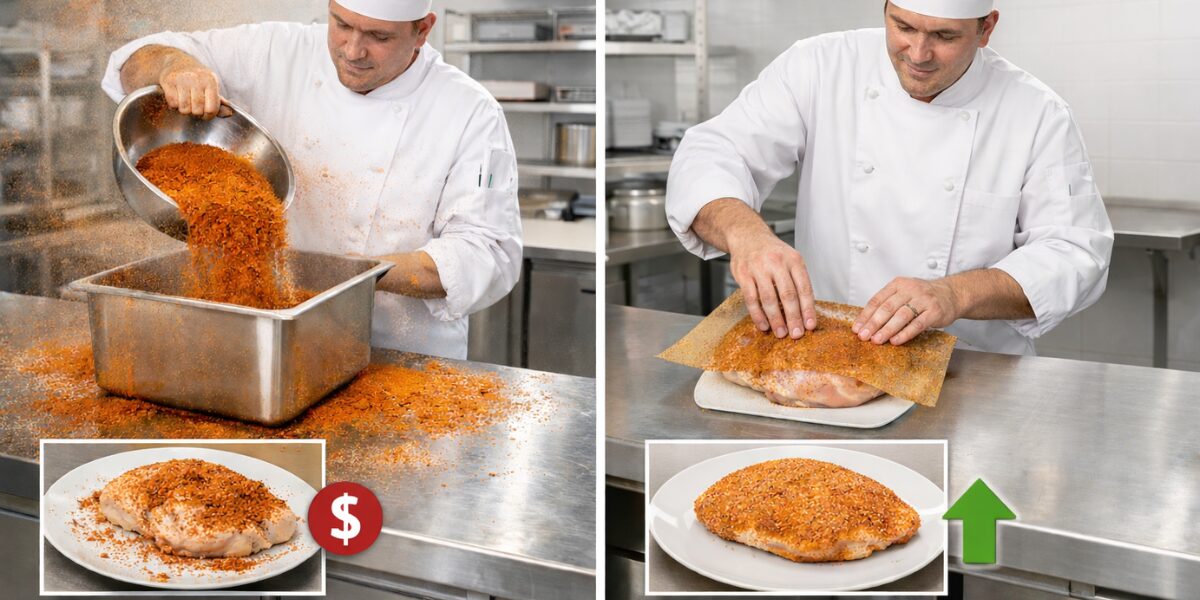
Manual application methods, whether by hand or through tumble marination, introduce variability. Some product receives more seasoning than intended; some receives less. The result is inconsistency that can lead to rework, customer complaints, or product that does not meet spec. Each of these outcomes carries a cost, but it is rarely isolated and measured. Over time, the cumulative impact on labor, materials, and throughput becomes significant, even if no single incident stands out.
Tumble marination is one area where hidden costs accumulate. While effective for seasoning large batches of whole meats, adding dry seasoning to a tumbler introduces operational trade-offs that are often underestimated. Cleanup time increases significantly compared to plain meat or liquid marinades alone, and the abrasive nature of dry spices accelerates wear and tear on the equipment. Over time, these factors contribute to higher maintenance costs and reduced equipment lifespan.
Hand application creates similar challenges, with loose seasoning accumulating on equipment, floors, and surrounding areas. Seasoning can also fall into the sealing area of the package, which may compromise seal integrity and lead to product failures downstream.
Sanitation time is another factor often underestimated in production planning. Switching between flavor profiles or SKUs may require full sanitation to prevent cross-contamination or allergen carryover. For facilities managing diverse product lines, these changeovers can represent hours of lost production each week. The time spent disassembling equipment, scrubbing surfaces, and verifying cleanliness is time that could otherwise be devoted to output.
Then there are the micro-delays: the few extra minutes spent adjusting equipment, the slight slowdowns caused by inconsistent seasoning coverage, the brief pauses when operators need to verify application quality. Individually, none of these events registers as significant. Collectively, they erode throughput in ways that are difficult to quantify but very real. A processing line that loses five minutes per hour to seasoning-related interruptions may not trigger any alarms, but across a full shift, that adds up to meaningful capacity left on the table.
Why Seasoning Is Difficult to Optimize
Part of the reason these losses persist is that seasoning is inherently complex to control within a processing environment.
Line speed affects how evenly spice can be applied. Product variability, including differences in moisture content, surface texture, and portion size, influences how seasoning adheres and transfers. Food safety requirements add constraints around allergen management, cleaning protocols, and traceability. Labor availability shapes what methods are practical to implement and maintain consistently across shifts. Regulatory compliance adds another layer of complexity, particularly for facilities handling multiple allergen-containing blends.
These factors interact in ways that make universal prescriptions unreliable. What works in one facility may not translate directly to another. A solution that performs well on bone-in poultry may behave differently on deli meats, bacon, or plant-based proteins. Even within a single plant, different product lines may require different approaches to achieve consistent results.
This complexity explains why many plants default to methods they already know, even when those methods are not optimal. The perceived risk of changing a proven process often outweighs the uncertain benefit of improvement. And without clear visibility into the true cost of current practices, the case for change remains difficult to make internally. Operations teams are understandably cautious about disrupting what appears to be working, especially when the problems are not immediately visible.
How Experienced Teams Evaluate Seasoning Performance
In operations that have taken a closer look at seasoning efficiency, the approach tends to follow a consistent pattern.
Teams begin by mapping where seasoning-related losses actually occur. This means tracking not just spice usage, but also rework rates, cleanup time, changeover frequency, and any quality holds related to inconsistent application. The goal is to build a baseline that reflects the full cost of current methods, not just the direct material expense. Without this kind of comprehensive view, it is difficult to identify where the largest opportunities for improvement exist.
From there, the focus shifts to understanding variability. Which products or SKUs generate the most rework? Where do changeovers take longest? Are there specific shifts or lines where application quality is less consistent? These questions help isolate the areas with the greatest potential for improvement and allow teams to prioritize their efforts.
Testing becomes central to any evaluation. Given the variability inherent in protein processing, teams typically pilot changes on a limited basis before committing to broader implementation. This allows them to assess performance under real conditions, identify unexpected constraints, and refine the approach before scaling. Processors who have been through this process understand that testing is not just a validation step; it is how you learn what actually works in your specific environment.
Throughout this process, collaboration between operations, R&D, and quality assurance is common. Each function brings a different perspective. Operations focuses on throughput and labor efficiency. R&D evaluates technical performance and product consistency. QA ensures that any changes meet food safety and regulatory requirements. Alignment across these groups reduces the risk of adopting solutions that create new problems elsewhere in the process.
A Different Approach to Seasoning Application
For processors looking to address hidden seasoning costs, the question is often not whether to change, but how to change without disrupting what already works.
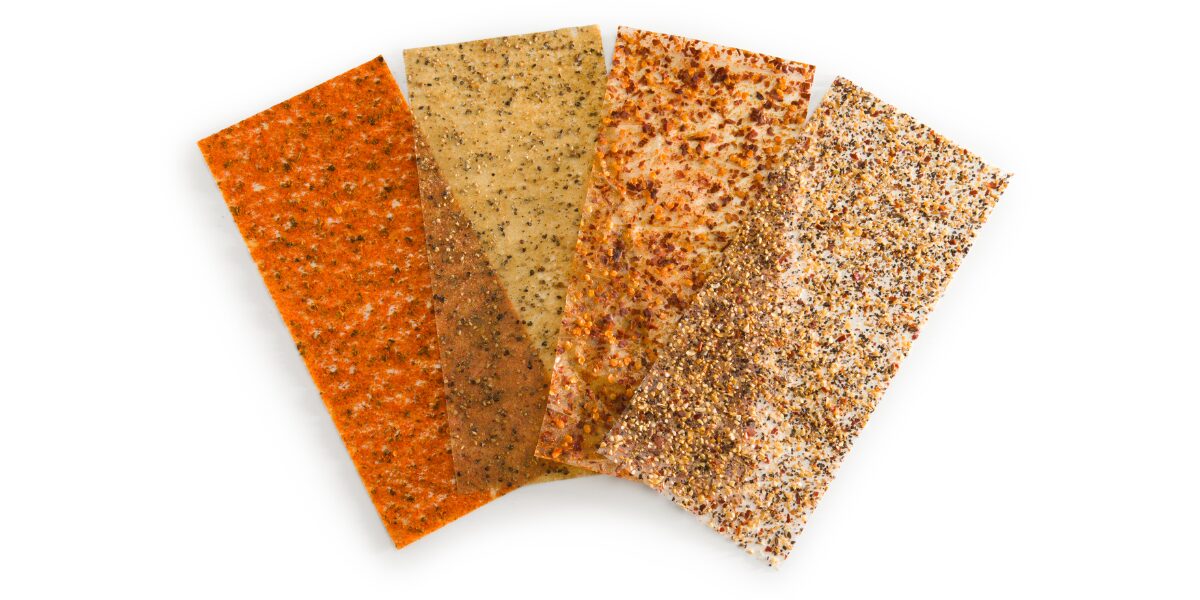
One approach that has gained traction involves pre-applied seasoning technologies, where spice blends are integrated into substrates like sheets, casings, or bags that are already part of the packaging or processing workflow. Rather than applying seasoning as a separate step, the product is seasoned during packaging or cooking. The moisture in the protein releases the seasoning from the substrate, causing it to transfer evenly to the surface.
Flavorseal’s SureTransfer line represents this kind of approach. The technology is available in multiple formats: Seasoned Sheets for portion-cut proteins like steaks, chicken breasts, and bacon; Seasoned Casings for deli meats and roasts; and Seasoned Bags that combine shrink or cook-in functionality with built-in seasoning. Each format addresses a different application, but the underlying principle is the same: apply seasoning and packaging in one step, with controlled, consistent coverage.
This method addresses several of the loss points described earlier. Because the seasoning is pre-applied in controlled conditions, coverage tends to be more uniform than manual methods allow. Waste is reduced because the spice is applied only where it is needed, with no excess accumulating on equipment or floors. Cleanup time decreases because loose seasoning is no longer part of the production environment. Changeovers become faster, since switching flavors often means swapping out a casing or sheet rather than sanitizing an entire line.
There are also operational benefits beyond cost reduction. Consistent seasoning coverage can improve product quality and reduce customer complaints. Faster changeovers support more flexible production scheduling. And eliminating manual application steps can help address labor constraints that many processors face today.
Whether this approach fits a given operation depends on the specifics of the process. Product type, line configuration, volume, and regulatory requirements all play a role. Testing remains the most reliable way to evaluate fit and quantify potential benefits within a specific environment.
A Question Worth Considering
For many protein processors, seasoning operations represent a category of cost that has simply been accepted as normal. The losses are real, but they are spread across enough small events that they rarely demand attention.
That does not mean they cannot be addressed.
Understanding where seasoning-related margin erosion actually occurs is the first step. From there, experienced teams can evaluate options, test alternatives, and make informed decisions about where change makes sense and where it does not.
Flavorseal’s team regularly works through these questions with processors, helping to identify specific opportunities within each facility’s unique process. If seasoning efficiency is a challenge your operation has not yet examined closely, it may be worth a conversation to explore whether solutions like SureTransfer could reduce costs while improving consistency.