Q4 production targets go up. The equipment, labor, and facility constraints that shaped your baseline output do not. The expectation is more volume from the same lines, the same shifts, and in many cases fewer experienced operators than the schedule requires. That is the environment where inputs that seemed adequate at normal volumes start revealing where they help and where they may cost time.
One of the most controllable, and among the most frequently overlooked, is the packaging itself.
It touches so many stages that its impact on throughput is easy to underestimate: forming, filling, sealing, cooking, cooling, final handling. When packaging performs consistently, it supports smoother runs, fewer interruptions, and output that holds closer to schedule. When it does not, the consequences show up as labor variance, rework, or gaps between scheduled and actual output.
How Packaging Performance Supports Higher Throughput
Operations that sustain high output through peak season share a common trait: process consistency. When each stage of the line runs with minimal variability, the gap between theoretical capacity and usable output narrows. Packaging contributes directly to that consistency, because it interacts with nearly every stage of the production sequence.
Netting that runs reliably, flexible packaging that seals cleanly at sustained speeds, cook-chill bags that maintain integrity through the full thermal cycle: these are the conditions that keep a line running at pace across a full shift.
When any of these introduces variability, whether an operator pausing to reposition a netting that shifted during loading or a seal failure that pulls a unit for rework, those interruptions are manageable at lower volumes but compound quickly during peak runs where there is less slack in the schedule to recover.
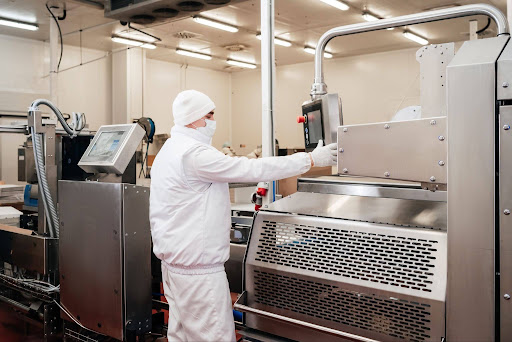
The real constraint during peak production is rarely equipment speed. A line rated for a given number of cycles per minute will sustain that rate more reliably when upstream and downstream steps introduce minimal variability. Process consistency, not mechanical capability, is what closes the gap between rated capacity and actual output during extended peak-season runs.
Netting Performance and Downstream Throughput
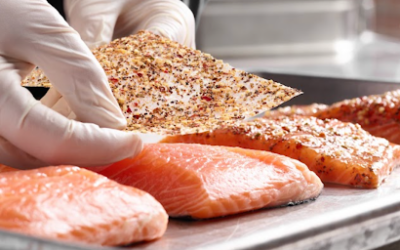
In protein-processing operations, the relationship between netting and throughput extends well beyond the stuffing station. When clipping and stuffing run without additional operator intervention, that consistency carries forward. After thermal processing, netting that releases cleanly from the product surface allows slicing, portioning, inspection, and final packaging to proceed at pace.
When netting performance is less consistent, the effects compound downstream: more frequent reloads or repositioning at the stuffing station, adhesion issues after cooking that slow removal, and surface damage that diverts units toward rework or reclassification. Each of these adds handling time the production plan did not account for. On a line running several thousand units per shift, even small per-unit delays accumulate into meaningful throughput losses by the end of a run.
Flavorseal’s existing coverage of netting cost analysis addresses yield loss and per-unit labor implications in detail. The relevant consideration for peak-season planning is whether the netting currently in use can sustain that performance at higher volumes, across shifts where operator experience levels may vary. SureRelease netting, including release agent formulations for specific product and cook profiles, address this interaction between netting behavior and processing conditions. Evaluating netting performance before volume increases is more productive than adjusting for it after.
Flexible Packaging and Production-Line Continuity
When a flexible packaging format is well matched to the line, sealing, evacuation, and handling proceed without meaningful interruption. That reliability is what keeps throughput steady during sustained runs. A shrink bag, vacuum pouch, or thermoforming film performs a containment and protection function, but it also has to run reliably through the specific equipment and process configuration on each line.
Consider seal integrity as one example. Consistent seal performance across a full shift means fewer rejected packages, less re-running of product through the sealing cycle, and more of the planned output reaching the end of the line intact. Industry reporting has shown that a significant portion of seal defects in flexible packaging systems go undetected during production. Identifying and addressing the sources of seal variability before peak season reduces unplanned handling time and keeps operators focused on planned tasks rather than managing a background rate of rejects.
This is why format evaluation needs to go beyond spec sheets. How the material actually behaves on the equipment it will run on, under sustained speeds and extended shifts, is what determines whether it supports throughput or introduces drag.
SureSeal flexible packaging options span shrink bags, cook-in bags, vacuum pouches, casings, and roll stock films, each engineered for different processing stages and temperature profiles. The format that fits a particular operation depends on the equipment, the product, and downstream handling. Testing compatibility before peak demand begins is less disruptive than discovering a mismatch mid-run.
Cook-Chill and the Ability to Organize Production Ahead of Demand
Cook-chill operations serve a different environment than protein-processing lines, primarily commercial kitchens, commissaries, and institutional foodservice. The operational opportunity is familiar, though: the ability to produce more volume than the facility can serve in real time. Cook-chill addresses this by decoupling preparation from service, allowing production to happen in planned batches held under controlled refrigeration until needed.
The capacity benefit is organizational. Rather than compressing cooking, cooling, portioning, and service into the same window, cook-chill distributes production across available labor and equipment time. For operations facing holiday or event-driven demand spikes, where order volume can exceed what a conventional cook-and-serve workflow can deliver without adding shifts or equipment, this kind of scheduling flexibility can be decisive.
Packaging that performs reliably through the full thermal cycle is what makes this workflow possible. The bags must maintain seal integrity and food safety from cooking temperatures through rapid chilling and refrigerated storage. FlavorSaver cook-chill bags are designed for this cycle, with storage tolerances down to -20°F and re-therming capability up to 220°F. Accessories such as ring stands, heat sealers, and crates support handling efficiency at each stage. Validated cooling procedures, adequate chiller capacity, and disciplined temperature monitoring complete the system and protect the throughput gains cook-chill is designed to deliver.
How Packaging Decisions Support Skilled Labor
Across netting, flexible packaging, and cook-chill, the common thread is not the packaging itself but the labor each format either frees up or consumes. PMMI’s 2025 Inside the Workforce Gap report found that 95% of consumer packaged goods companies are struggling to hire skilled operators and technicians, with nearly 60% expecting those challenges to intensify. When experienced operators are that scarce, packaging that runs cleanly allows them to focus on the work that benefits most from their expertise rather than managing avoidable interruptions.
The practical distinction is whether additional handling is built into the workflow by design or layered on top of it by circumstance. Netting that feeds and releases consistently eliminates a recurring manual task the staffing plan may not account for. Flexible packaging that seals reliably at sustained speed removes a source of variability that would otherwise pull operators toward inspection and rework. These are measurable gains, and they matter most when the labor budget is tight and the schedule offers limited room for unplanned tasks.
Evaluating Packaging Performance Before Peak Production
All of this points to one practical conclusion: the time to evaluate packaging performance against peak-season requirements is before the schedule tightens, not during it.
Start by identifying which specific improvement the evaluation targets. A netting change aimed at improving release performance during removal answers a different question than a flexible packaging evaluation focused on seal consistency at sustained speeds. Framing the objective clearly prevents the evaluation from drifting into a general review that delays actionable conclusions.
Test under production conditions, not just in a lab. Supplier specifications and sample testing provide useful starting information, but packaging behavior changes under sustained loads, temperature cycling, and the handling patterns of an actual operation. Testing on the line, with the product and equipment that will run during peak, provides the most relevant data.
Pay specific attention to equipment and process compatibility. A format that performs well in controlled testing may interact differently with existing sealing equipment, stuffing horns, clipping systems, or chiller configurations. Operators who will run the product should be involved, because their observations often surface compatibility issues that bench testing misses.
Compare on total operational cost, not unit purchase price. A packaging option that costs more per unit but reduces rework, handling time, or reject rates may deliver a lower total cost per finished unit. Procurement, operations, and quality teams that evaluate together tend to reach more durable conclusions than any single function working alone.
Timing matters too. Building in enough time for adjustment, operator training, and supply confirmation helps ensure that a packaging improvement delivers the expected gains from day one of peak production rather than introducing its own learning curve.
Capturing Reliable Output When Demand Increases
Packaging decisions rarely make anyone’s list of strategic Q4 priorities. But they sit at the operational level where throughput is actually gained or given back. Netting that releases cleanly, flexible packaging that seals consistently, cook-chill bags that hold integrity through the thermal cycle: each one contributes to the same outcome. Fewer unplanned interventions. Output that tracks closer to schedule.
Flavorseal works with operations teams across protein processing and commercial food production to evaluate packaging performance within the context of each facility’s equipment, products, and processing conditions. That includes in-house R&D, customizable configurations across netting and flexible packaging formats, U.S.-based netting manufacturing, and field support during testing and implementation.
If your operation is planning for increased volume and packaging performance is part of the equation, a conversation with Flavorseal’s team is a practical place to start.